When a Child Has No Place to Call Home, Childhood Does Not Wait
Ireland’s new homelessness plan is a welcome start. The test will be what changes for children now.


A child can carry a lot in a schoolbag. Their books, lunch, a jumper, maybe a favourite small thing they do not want to leave behind.
But no child should have to carry the uncertainty of not knowing where they will sleep, whether they can settle into school, or how long it will be before their family has a place of their own again.
My own childhood included homelessness and time in women’s refuges. Every family’s story is different, and emergency accommodation today is not the same experience as a refuge. I was about six when my mother brought us to a refuge in North Dublin.
When I look back, the strongest memory I have about my time being homeless, it is not homelessness itself that comes to mind. It is how happy I felt to be able to play, make friends, go to school. It makes me think about times when people genuinly spoke to me without anterior motives, listened to me without being distracted and made me feel that I belonged at a time when I really did not beling anywhere.
In “Open Your Hand,” I wrote about one small moment from that time that has stayed with me. I was seen, encouraged and allowed to be a child. That experience shaped how I defined safety. To me, it was more than a roof, it was the feeling that someone had noticed you and cared what happened next.
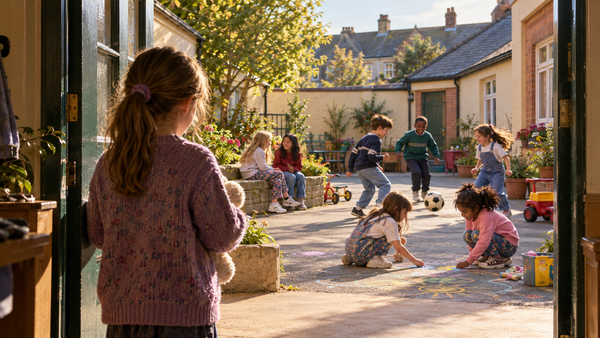
Some of my happiest memories began in the refuge, even though the circumstances that brought us there were difficult. I reflect on that in “When We Were Finally Allowed to Be Children”. Those memories are part of why I believe children need more than accommodation alone. They need room to play, familiar routines, privacy where possible, and adults who see the child behind the crisis.
This week, the Government published Aire, its first dedicated Action Plan on Child and Family Homelessness. It comes at a time when 5,830 children were living in State-funded emergency accommodation in August 2026. That number is difficult to comprehend. Behind it are thousands of individual children, each with a school day, friendships, worries and hopes that do not pause while the adults around them search for a home.
The plan sets out 43 actions under three broad aims: preventing homelessness, protecting children while they are in emergency accommodation, and helping families move into secure housing. It recognises that the response cannot sit with housing services alone.
Children also need access to education, health care, childcare, food, transport and the support of people who understand what their family is going through.
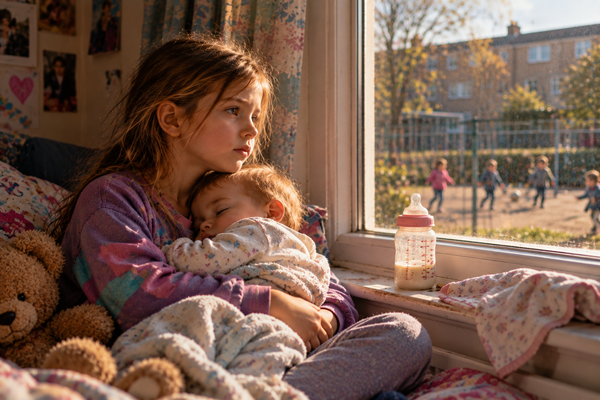
A child may be safe in one sense and still be carrying the strain of constant change. They may be trying to do homework in a crowded room, missing time with friends, or keeping quiet about where they are staying. Some children may also take on responsibilities beyond their years as their family tries to cope. I have written about that experience in “The Little Mammy: When a Child Becomes the Carer”. Support should not depend on a child being able to explain all of this perfectly, or on a parent having the energy to find their way through several separate services.
There is another important part of Aire: children and families with lived experience were consulted in developing it. Their voices helped shape the plan. That needs to continue as the actions are put into practice. Listening should not end once a report has been launched.
Children should be able to say what is helping, what is making things harder, and what still needs to change.
The plan says its actions will be progressed within 12 months, with implementation monitored every quarter. Those commitments give the public something concrete to look for. We should be able to see whether families are being supported before they lose their homes, whether children’s day-to-day needs are being met while they are in emergency accommodation, and whether families are moving into stable housing sooner.
A plan can set direction. It cannot, by itself, give a child a quiet place to sleep tonight or restore the routine they have lost. That is why delivery matters as much as the words on the page. The Government has acknowledged that childhood does not pause while homes are being built. Now that understanding has to be visible in the way children are supported today.
When a child has no place to call home, they are still a child first.
They deserve time to learn, to play, to feel safe and to imagine a future beyond the room they are in. The measure of this plan will be whether those simple parts of childhood become more possible for the children who need them most.